

Stay Connected
Connection and communication create confidence for both older adults and caregivers.
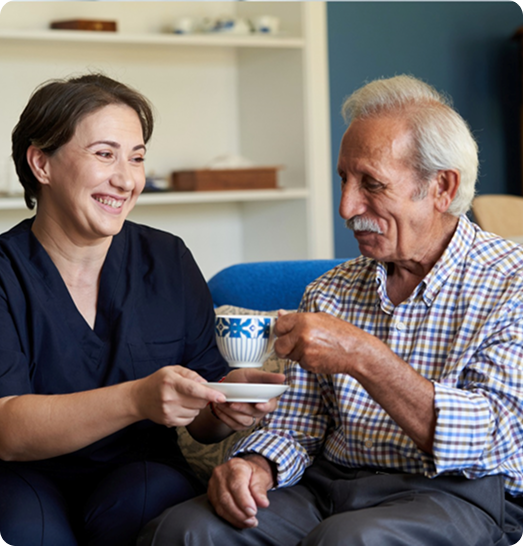
Staying Connected and in Communication are Crucial for Safe Independence
When it comes to growing older, adults want to live independently and confidently, and family members as well as professional caregivers want to support them in these goals. Whether it is going for a walk, attending a social outing, or spending time in the garden, having an advanced technology tool that enables easy communication brings calm and peace of mind to caregivers while relieving anxiety for older adults.
While smartphones can make phone calls and various personal emergency response systems (PERS)—such as belt clips or lavaliers—can provide help in emergencies, they often fall short. These devices are not always fashionable, may be forgotten, and require the older adult to press a button. If a person faints or becomes unconscious after a fall, they may be unable to call for help.
Whether an older adult lives at home or in a senior living community, real-time communication with family and professional caregivers is essential. Even the most diligent caregivers cannot be present 24/7, but advanced technology enables greater confidence through continuous situational awareness.
Many surveys show that older adults are increasingly embracing smartwatches
and app-based trackers for:

Easier communication
Including voice and video calls and messaging

Safety features
Such as fall detection and SOS

Health monitoring
Including vitals and activity tracking

Greater independence
Through simple voice commands and large, easy- to-use icons
These tools help combat isolation while keeping older adults connected to family and caregivers.
The Growing Demand for Connection and Communication
Older adults are increasingly interested in tracking their health information and maintaining autonomy over their health data.
By understanding health metrics, activity, and location, both the loved one and their caregiver can know how they’re doing, what’s different, and if it’s concerning. Situational awareness combined with always-on communication means living life with No Fear.
A 2025 AARP study on older adult technology usage found:

82%

33%

1/3
This same AARP report found that nearly half of family or professional caregivers already use an app with GPS tracking or remote patient monitoring to help support older adults.
As generations who used technology earlier in life continue to age, wearable adoption is accelerating:
2026
The oldest Boomers turn 80
2031
The oldest Millennials turn 50
36-48%
Of older adults already own a
wearable today
The primary criteria driving adoption are privacy protection and ease of use.
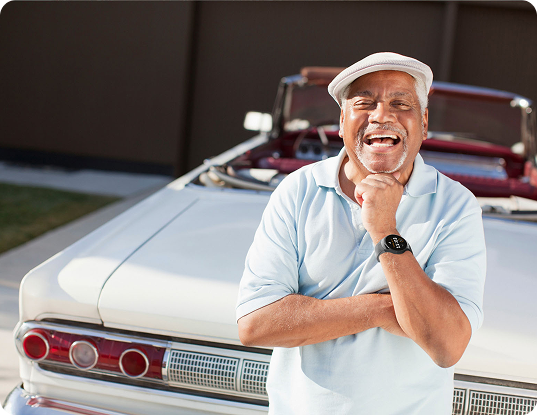
Older Adults Want Technology They Can Trust
Theora Care™ has created the most advanced situational awareness platform using artificial intelligence (AI), neural networking, and GPS—while addressing something many technology companies overlook: we design with older adults, people living with dementia, and their family caregivers to ensure the technology delivers the value users truly want.
Our smart wearable watch provides cellular service through partnerships with companies such as AT&T. Unlike traditional smartphones or smartwatches, Theora Care offers hands-free, automatic voice communication to determine whether the wearer needs help.
The system preserves dignity for older adults who may experience a soft fall but are unharmed, while also ensuring caregivers and emergency personnel are alerted if the wearer does not respond to the question, “Have you fallen?”
This Approach Creates Trust
This approach gives Theora Care customers- whether B2B partners such as senior living operators and home care agencies or older adults living at home—confidence that we understand their lives, needs, and goals. We work alongside older adults and caregivers to serve as a trusted partner through advanced technology.
Privacy You Can Trust
We ensure that privacy is never in question. Theora Care does not sell or share personal customer data. Only the wearer or subscriber determines who can access their health information.
While we may analyze anonymized trends-such as insights among groups of 70-year-old women living alone-to improve outcomes, personal identities are never revealed or unmasked.
Real-World Impact
Watch the Detroit News story showing how Theora Care partnered with law enforcement to find a man with Alzheimer’s who had wandered.
Frequently Asked Questions
If a loved one has wandered and does not respond to the question about whether they have fallen, the caregiver is contacted but what if the caregiver does not respond, what happens next?
If a primary caregiver has not responded, Theora Rhythms also texts the other members of the care team in their app that a potential fall may have happened. Any one of them can use the Quik Connect feature to reach their loved one.
How is Quik Connect different?
Other smartwatches require the wearer to actively answer an incoming call. This may not be possible in case of injury, unconsciousness, cognitive limitations, or even inability to reach the call in time. Our Quik Connect eliminates those worries by automatically establishing a call between the caregiver’s smart phone and the wearer’s smartwatch. Many of our customers have told us their peace of mind is greatly increased because they can rely on this to be able to reach their loved one in a potential emergency, or even just because.