

1 in 4 older adults will fall
We help you reduce your falls risk and get immediate help if needed.
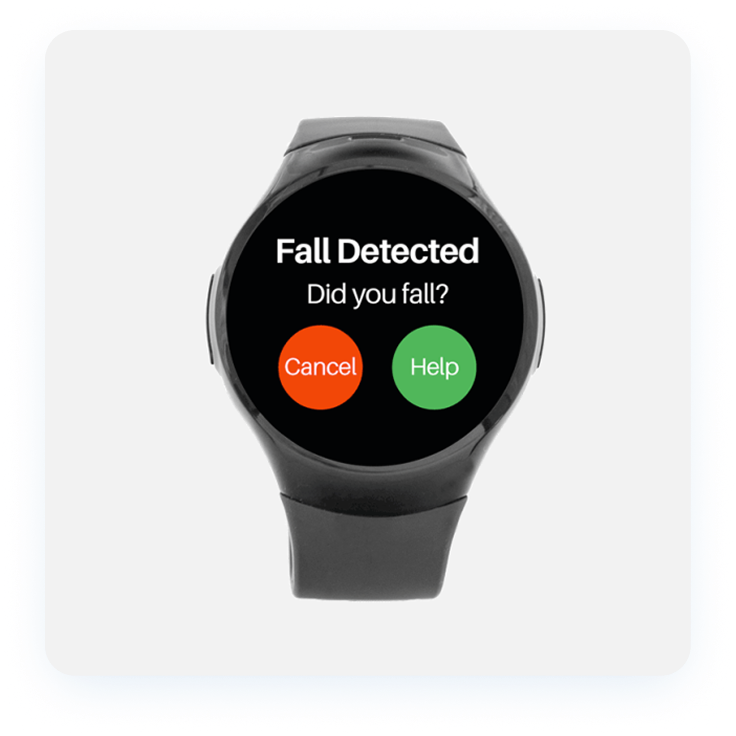
The Risk for Falls is Real
Our solutions help predict, detect and connect.
One of the realities of aging are risk factors leading to harmful falls: balance issues, neuropathy in the feet, arthritis making steps and stairs painful to navigate, muscle strength affecting gait, vision impairments and medications which are now seen as a leading cause for older adult deaths from falls.
Whether you live in an assisted living, memory care, an independent senior living community, or at home, preventing falls is a top priority for caregiving staff and families.
1 in 4 older adults will fall with often devastating or deadly effects
Deaths from falls over the last 30 years among older adults have tripled (mostly due to medications)
Falling once doubles the risk of falling again within 3 years
60% of dementia adults wander and almost 1/2 of those suffer a fall due to fatigue or other factors
50% who lay on the floor unaided for more than 1 hour will die within six months
1/3 of those who have fallen experience “post fall syndrome” where they refuse to move or be active for fear of falling again
Not all fall detection apps and technology are the same. Find out how our Smart Fall Detection uses more advanced technology to not only detect but start to predict falls with accuracy that reduces false/positive readings for better responsiveness.
Soft Falls vs. Hard Falls
Not all falls are the same and this is where the advanced technology from Theora Care™ knows the difference.
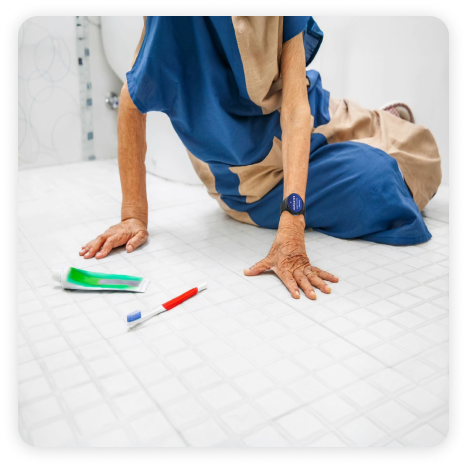
A “soft fall” is when a person experiences a controlled, slowed descent but is able to use friction by grabbing onto furniture or a wall to break the fall. With a soft fall, the person typically remains conscious and is able to communicate. While injuries can still occur with a soft fall, they tend to be less severe than a hard fall.
Many fall detection apps will initiate a call or alert if a person experiences a soft fall but this can happen even if the adult is simply lowering themselves to the ground for yoga or stretching. The annoyance of having emergency alerts be enacted in these instances can be a reminder to the older adult of their frailty and negatively impact their positive outlook, mental health or desire to use fall detection technology. Telling the difference is essential and only Theora Care delivers the technology to know that difference.
“Hard falls” are more serious and often lead to emergencies where senior living staff, families or actual EMTs have to help the fallen person. They may be unconscious, have painful broken bones or limbs, be bleeding or worse. Some surveys show the average length of time someone is on the ground after a fall without any help is 1 hour. If they are somewhat alert, the fear of lying there waiting for help can create anxiety and other health issues. This is why it is vital to have the type of communication smartwatch where the wearer can identify if they need help or are OK or if they do not respond, staff and family caregivers can be immediately alerted.
Alzheimer’s Increases Balance Issues and Wandering
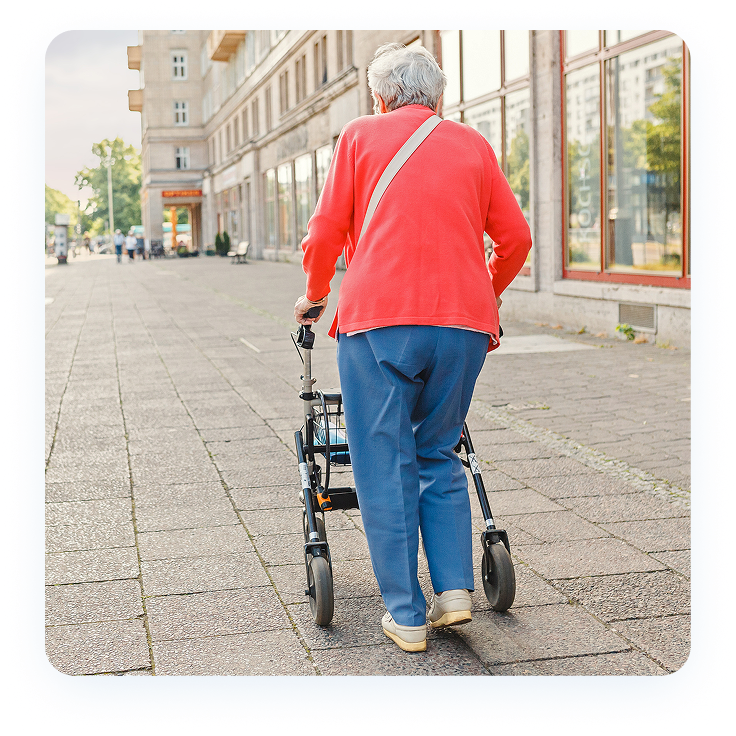
For those with Alzheimer’s balance issues are even more severe than the average older adult. Alzheimer’s does not just affect memory, other regions of the brain are also impaired: the cerebellum where actual balance and movement are affected; spatial awareness (misunderstanding depth or distance or floor changes causing missteps), problems with visual objects (for instance seeing a black rug as a black hole and trying to step around it), and the basal ganglia in the brain that oversees motor control, smooth movements and gait performance.
And while statistics shows 1 in 4 (25%) adults over age 65 will fall and almost 1/3 of older adults fall annually, for those with Alzheimer’s 50% will experience a fall episode yearly.
Whether living in a memory care community or at home, falls prevention for Alzheimer’s adults is an essential part of living a quality life.
Overcoming Post-Fall Syndrome
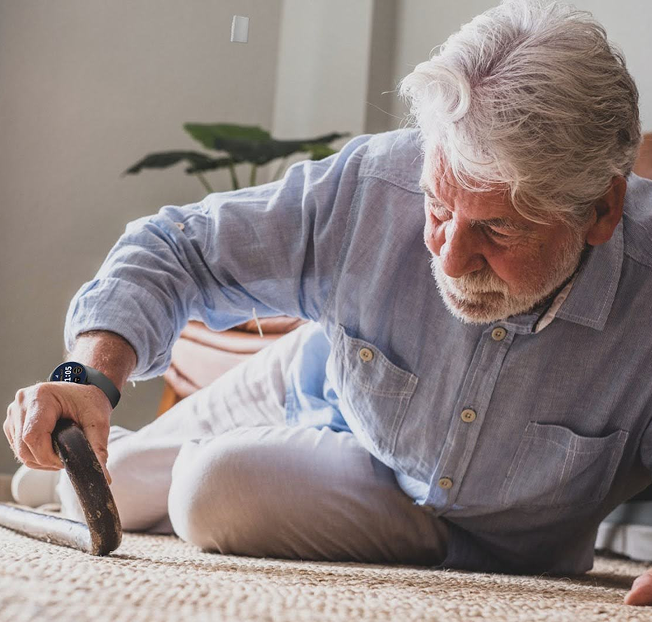
Statistics show that once an older adult falls, they have twice the risk of falling again within 3 years. This fear of another painful fall, which may have resulted in weeks or months of rehabilitation, often creates an anxiety in older adults known as “post-fall syndrome.” The person who has fallen, adopts a more sedentary lifestyle and abandons activities they may love for fear of falling again.
This lack of activity, and even more seriously the potential to become lonely or feel like life has fewer positive moments, can have deleterious effects on a person’s mental health and ultimately on their physical health.
It is critical for senior living staff, other long-term care agencies and families to help older adults overcome their fear of falling through the support of advanced technology, that Theora Care, that helps to prevent those risks and restore confidence.
Frequently Asked Questions
How does the Theora Connect smartwatch help prevent falls?
While we cannot guarantee that every potential fall will be prevented, because our AI and neural networking technology is constantly learning about the wearer’s activity patterns and gait, we can start to predict or detect an upcoming fall and alert the wearer and their family caregiver to potential increased risk. We also have an industry-leading >95% accurate false/positive meaning we are able to tell the difference between hard and soft falls apart for better accuracy.
My mom fell twice at home and we had to move her into assisted living – would this smartwatch still be helpful to her?
While the staff in assisted living are very vigilant about your loved one’s care, they cannot be with them 24/7. In fact, studies show 45-50% of memory care residents fall each year. The staff needs help which is where Theora Care technology comes in – “always on, always learning and listening.” The memory care staff also want to encourage your loved one to participate in outings and activities. By having your mom wear her Theora Connect watch, it helps gives the professional caregiving staff more data to predict and hopefully prevent falls and helps them respond immediately if your mom has a soft or hard fall. It will also help care staff to quickly them locate them if they get leave the facility and are lost.
What if my dad falls and hits his head and cannot call me?
That is the peace of mind for family members in our smartwatch specifically designed for older adult lifestyles. Once the smartwatch asks him on the watch screen if he has fallen and he does not respond, the SOS calls you and texts the rest of the care team to help. This saves hours of a loved one lying on the floor without help which endangers their lives.